























DEGREE
Petrochemistry
DEGREE
Petrochemical
CES Resolution
RPC-SE-09-NO.086-2020
DURATION
4 Years
MODALITY
On-campus
Academic Identity
Learn about the foundations of the program
- Mission
To train outstanding professionals and researchers specialized in petrochemical and related fields—creative, humanistic, with leadership skills, critical thinking, and a strong sense of civic responsibility—capable of generating, applying, and disseminating knowledge, as well as providing and implementing solutions to societal challenges in order to promote the comprehensive development of Ecuador.
- Vision
To be a leading national benchmark in the academic, scientific, and technological education of petrochemical sciences, recognized for its professional and human quality, with a direct link to the country’s strategic industries, and contributing to national development through knowledge and research as generators of added value.
- Program Objectives
- General objective
To train highly qualified professionals in the broad field of Engineering to engage in the production processes of basic, intermediate, and final petrochemical products, through the characterization of raw materials, applying the principles governing inherent chemical reactions, and the design and implementation of petrochemical production system models that integrate quality, safety, and environmental management.
1. Knowledge-related
To manage petrochemical production systems based on the sustainable use of conventional and non-conventional raw materials available in Ecuador, as well as high-demand basic, intermediate, and final petrochemical products, in order to develop learning that enables the application, research, validation, and transfer of appropriate technologies for problem-solving and for advancing petrochemical development, thereby strengthening the production process and gradually reducing current imports.
2. Relevance-related
To train petrochemical professionals who respond to the supply and demand requirements of basic, intermediate, and final petrochemical products, through research, validation, and the transfer of technology and knowledge that promote sustainable production and productivity using clean technologies, with respect for the environment—especially within their area of influence—and that contribute to the transformation of the productive matrix.
3. Learning-related
To develop cognitive abilities that prepare students to evaluate, plan, develop, innovate, and operate petrochemical systems and/or plants, enabling them to undertake new models of petrochemical technologies and production.
4. Citizenship-related
To integrate the program with the community—particularly within its area of influence—and with societal stakeholders, in order to promote community-based management of sustainable petrochemical production models that recover ancestral knowledge, implement best practices and new technologies within an inclusive, participatory, and gender-equitable framework, contributing to the well-being of society (“Buen Vivir”).
Program video
Experience what it’s like to study Petrochemistry
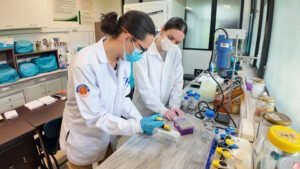
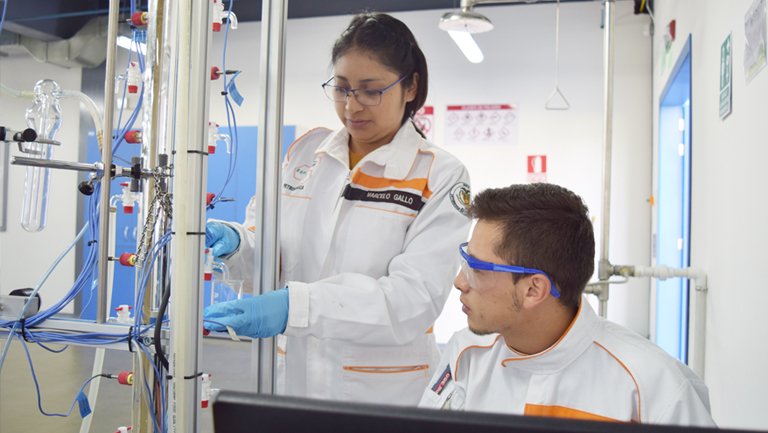
Discover daily life in our classrooms, laboratories, and academic spaces. Students, faculty, and researchers share their stories.
Learn about the foundations of the program
Profiles and outcomes
The professional we train and the competencies you will develop
- Professional Profile
The professional profile of a graduate in Petrochemistry is characterized by a solid foundation in chemistry, chemical engineering, physics, mathematics, and process technology. Additionally, they are capable of designing, operating, and controlling petrochemical processes, conducting scientific and technological research, and applying computational and management tools to improve process efficiency and product quality.
Among the skills and competencies that a Petrochemistry professional should have are:
a. Knowledge of petrochemical production processes and their environmental impact.
b. Ability to design, operate, and optimize petrochemical processes and plants.
c. Ability to solve technical and technological problems in the petrochemical field.
d. Competence to conduct scientific and technological research in the field of petrochemistry.
e. Ability to work in teams and lead projects in the petrochemical field.
f. Knowledge of environmental and safety regulations applicable to the petrochemical industry.
g. Ability to communicate effectively in technical and scientific environments.
- Graduate Profile
a. Executes maintenance protocols under standards of quality and integrity, demonstrating professional ethics.
b. Participates responsibly in the analysis and development of regulations for petrochemical products entering the country.
c.Correctly applies international nomenclature standards for effective scientific communication. Applies techniques for the preparation and identification of organic compounds. Interprets thermodynamic problems using mathematical and technological tools. Applies degrees of freedom and sampling techniques, as well as parametric hypothesis testing for decision-making. Uses analysis of variance and multiple regression for resource optimization.
d. Applies technical and scientific knowledge to the design, construction, and maintenance of energy facilities and chemical reactors used in industrial-scale petrochemical plants.
e. Understands the context of the stages involved in crude oil treatment, considering the nature of the sample in order to develop independent judgment that enables them to participate in the development, design, and evaluation of the engineering associated with its transformation into high-value-added derivative products. Analyzes and evaluates the processing and mathematical modeling of signals and systems. Identifies, analyzes, and assesses the potential environmental impacts, both positive and negative, of any project to be implemented, using environmental conservation criteria tools. Applies instrumental, spectroscopic, electrochemical, chromatographic, and thermal techniques to determine the physicochemical properties, composition, and atomic and molecular behavior of matter.
- Learning Outcomes
1. Applies technical criteria for the transformation of petroleum through refining processes into derivative products, especially basic petrochemical products such as olefins and aromatics. Applies acquired knowledge of metal corrosion processes for the proper selection of materials in the construction of petrochemical plants.
2. Develops and optimizes operations and processes for the manufacturing, innovation, processing, and commercialization of basic, intermediate, and final non-plastic petrochemical products, taking national and international standards into consideration. Applies foundational methodologies used by the industry for the definition and design of competitive production plants.
3. Applies acquired knowledge to contribute to the development of chemical processes involving the manufacturing and transformation of polymeric materials. Applies foundational methodologies used by the industry for the definition and design of productive and competitive plants. Classifies types of polymers. Applies polymer characterization techniques. Applies and evaluates theoretical models and develops an understanding of their application limits, based on their derivation, such as the solution dilution approximation.
4. Designs and evaluates petrochemical processes in compliance with current environmental regulations and promotes bio-awareness regarding the use of polluting petrochemical products such as plastics.
5. Creates and promotes national technology for the manufacturing of primary, secondary, and tertiary petrochemical products, contributing to the transformation of the country’s productive matrix.
6. Carries out activities related to the petrochemical field for the benefit of vulnerable sectors in our environment.
7. Demonstrates universal and profession-specific values in their professional practice, acting with emotional intelligence, creativity, and entrepreneurship in the development of science and the arts, while respecting cultural diversity and gender equity.
8. Interprets and solves real-world problems by applying research methods, scientific methods, technological tools, and diverse sources of information in both the national language and foreign languages, with honesty, responsibility, teamwork, and respect for intellectual property.
9. Demonstrates leadership qualities and an entrepreneurial spirit for managing business and social projects in both the public and private sectors.
10. Applies the concepts, rules, and processes that govern the scientific research method, with application, correlation, and integration between current and ancestral petrochemistry, in order to generate technical reports, documents, and research findings in compliance with legal regulations on authorship and anti-plagiarism.
11. Evaluates the technical viability and economic feasibility of technical-scientific projects.
12. Develops and implements a scientific, social, or productive proposal by integrating the competencies acquired throughout the program to solve a real problem in the petrochemical field, in accordance with the degree completion options offered by the program.
Curriculum Structure
Academic structure of the program
Current Curriculum
Non-Current Curriculum
Program Teachers
Meet those who will guide you
Gallery Gallery
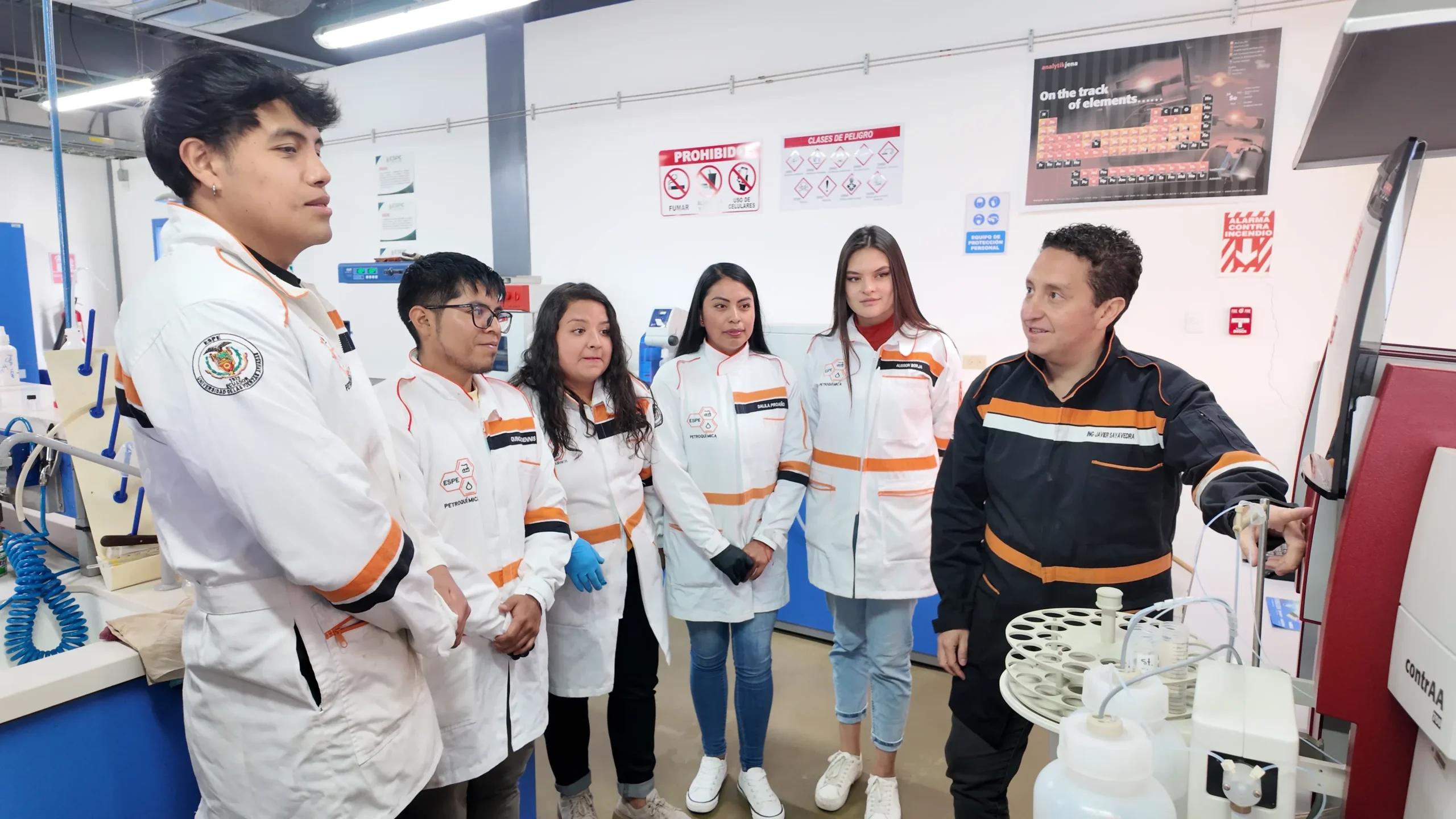
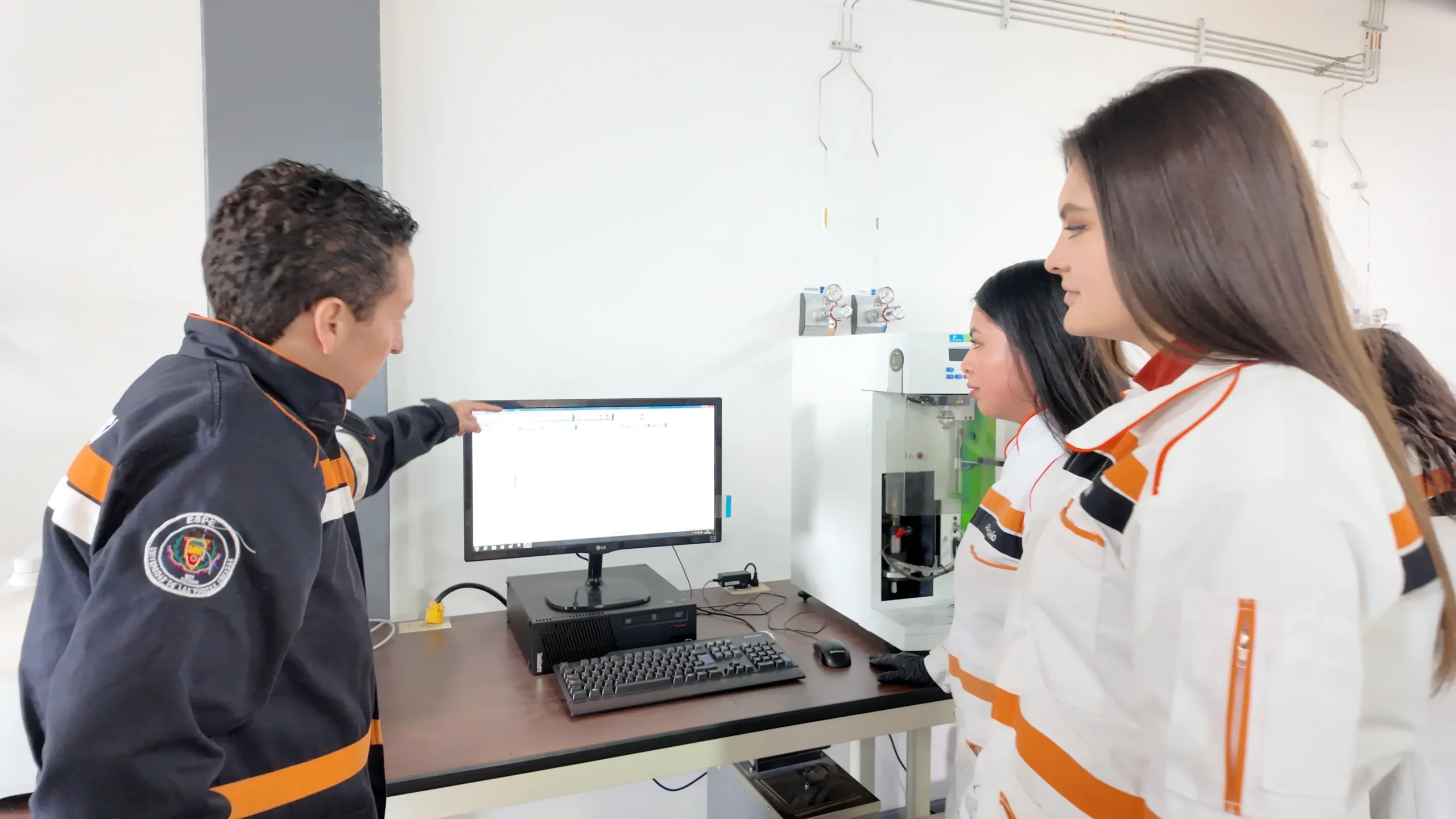
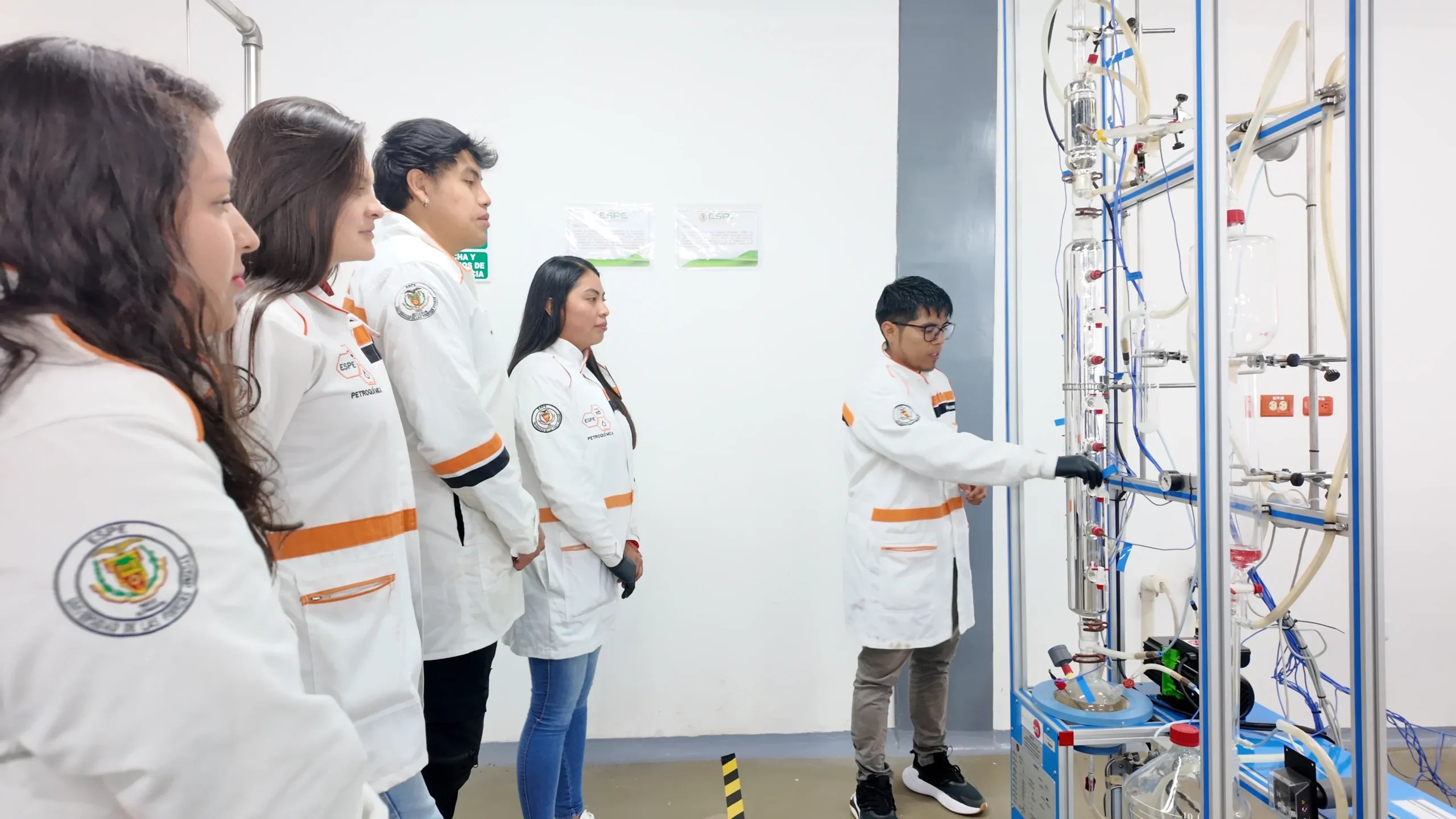
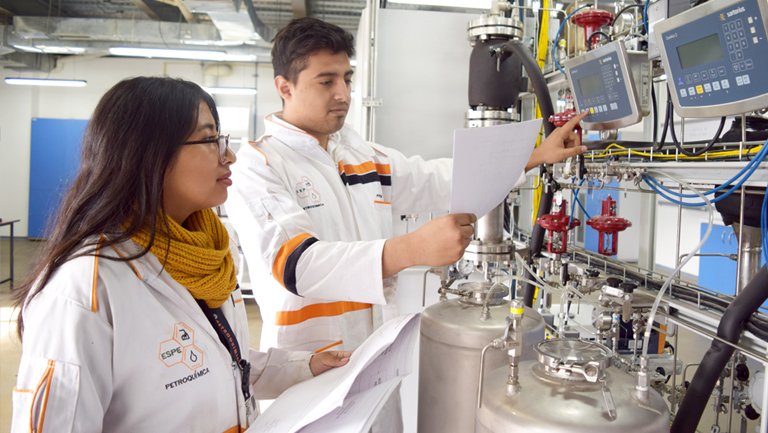
Spaces, moments, and experiences that bring the program to life
Admissions and costs
Spaces, moments, and experiences that bring the program to life

CES Resolution
RPC-SO-15-No 309-2020
Program Code
ISOF-SQ-2023
Accreditation
In process
Application Dates
March – April 2025 / August – September 2025
Program cost:
Article 356 of the Constitution of the Republic establishes, among other principles, that third-level public higher education shall be tuition-free, and that this gratuity is linked to the academic responsibility of students.
Begin your path in
Petrochemistry
Join Universidad de las Fuerzas Armadas ESPE and become part of an
academic community of excellence with international reach.