







DEGREE
Mechanics
DEGREE
Mechanical Engineer
CES Resolution
RPC-SO-24-No.526-2020
DURATION
4.5 years
MODALITY
On-campus
Academic Identity
Learn about the foundations of the program
- Mission
To train Mechanical Engineers of excellence, creative, humanistic, with leadership capacity, critical thinking and high citizen awareness; generate, apply and disseminate knowledge and provide and implement alternative solutions to the country’s problems in the mechanical area, in accordance with the Development Plan.
- Vision
To be a leader at the national level, in the training of Mechanical Engineers of excellence, in the production of knowledge and technology in the mechanical area; a benchmark for the practice of ethical, civic values and service to society
- Program Objectives
- General objective
To train mechanical engineers in a comprehensive manner, capable of promoting the development of the community with participation in the creation, design, modeling and simulation of projects of mechanical and energy systems, automated, efficient and eco-sustainable, executing their activities with leadership and professional ethics, implementing new technologies with inclusive, participatory and gender approaches as well as harmonizing technical aspects, economic, financial and environmental with current regulations, in pursuit of the well-being and good living of people.
1. To knowledge and knowledge
Create, model, design, simulate and build automated mechanical and energy systems, applying scientific, technological, technical and ethical knowledge in the field of mechanical engineering, for the production of goods and services in an efficient, sustainable and high-productivity manner.
2. Relevance
To train professionals with the capacity to respond to the expectations and needs of society, to the PNBV 2013-2017, to the development regime of Zones 2 and 9, to the prospect of global scientific, humanistic and technological development, and to the cultural diversity of our country, articulating the academic, research and linkage offer with society, to improve productivity and business competitiveness in the manufacturing and industrial sectors, through the efficient use of production resources and to achieve effective solutions to society's problems.
3. To the learning
To achieve in the student the knowledge, skills, abilities and values so that when creating, modeling, designing, simulating and building mechanical and energy systems, automated or not, they perform in the fields of maintenance, expertise, consulting, supervision, sales, production and others in the industrial field with an attitude towards self-learning, collective work, assertive communication, leadership, working with multi and interdisciplinary teams and respectful of the environment.
4. To Integral Citizenship
Integrate the career to the business community of the manufacturing and industrial sectors, mainly in its area of influence, and to the actors of society, to promote the community management of sustainable models for the design and industrial processes, conversion and transport of energy, as well as for the material transformation industry, which recovers ancestral knowledge, that they implement good management practices, new technologies in an inclusive, participatory and gender equity framework, to contribute to the Good Living of society.
Program video
Live the experience of studying Mechanics
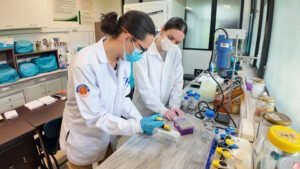
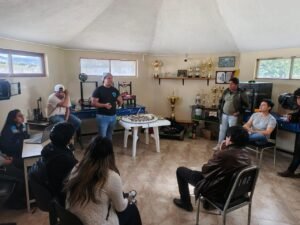
Discover daily life in our classrooms, laboratories, and academic spaces. Students, faculty, and researchers share their stories.
Learn about the foundations of the program
Profiles and outcomes
The professional we train and the competencies you will develop
- Professional Profile
The Mechanical Engineer graduated from the University of the Armed Forces ESPE, is a professional capable of managing Mechanical and/or Energy Transformation Systems in order to solve problems related to their Design, Construction, Assembly, Operation and Maintenance and Control and Improvement, through research and Technology.
Its decisions are made considering the criteria demanded by the socio-economic and environmental context of the Nation, carrying out a public and/or private technical-business management that, integrating ethical principles with self-confidence, leads to the satisfaction of Ecuadorian society, its professional self-realization and the creation of companies.
- Graduate Profile
The student of Mechanical Engineering, who has completed his studies in the career will be able to:
- Select materials and manufacturing processes taking into consideration social, environmental and professional ethical responsibility.
- Create, design, model and automate mechanical systems with social, environmental and professional ethical responsibility.
- Create, design, model and automate thermofluidic or energy systems with social, environmental responsibility and professional ethics.Generate and/or manage organizational systems that allow the proper functioning of the business and direct projects for the implementation, innovation and creation of new production units.
- Learning Outcomes
1. Create and design mechanical engineering systems using mechanical engineering theory, protocols, processes, methodology, and procedures to generate a model.
2. Creates and designs mechanical and energy systems for applications in industry considering theories, standards and regulations for mitigating environmental impacts in favor of flora, fauna, natural resources and ethnic groups in the areas of influence of the systems.
3. Creates and designs mechanical and energy systems for industrial applications using scientific and technical principles with professional ethics and moral standards and values such as honesty, integrity, social responsibility, etc.
4. Analyzes basic engineering problems using mathematical methods, develops their logic and programs them using a standardized language.
5. Communicates graphically through plans, diagrams, slides, diagrams following national and international standards and using computational tools.
6. Analyzes and solves engineering problems related to load balancing in machine elements and structures.
7. Makes rational decisions to solve society's problems, based on technical, economic, social and environmental knowledge.
8. Energetically balances conventional and alternative thermal systems to achieve environmental sustainability.
9. Establishes parameters for the selection of materials and the manufacture of specific mechanical elements. Interprets and solves basic problems of fluid systems and their applications.
10. Design and simulate machines and equipment with engineering criteria, making use of specialized software that optimizes execution times.
11. Generates and/or manages organizational systems that allow the proper functioning of the business and directs projects for the implementation, innovation and creation of new production units.
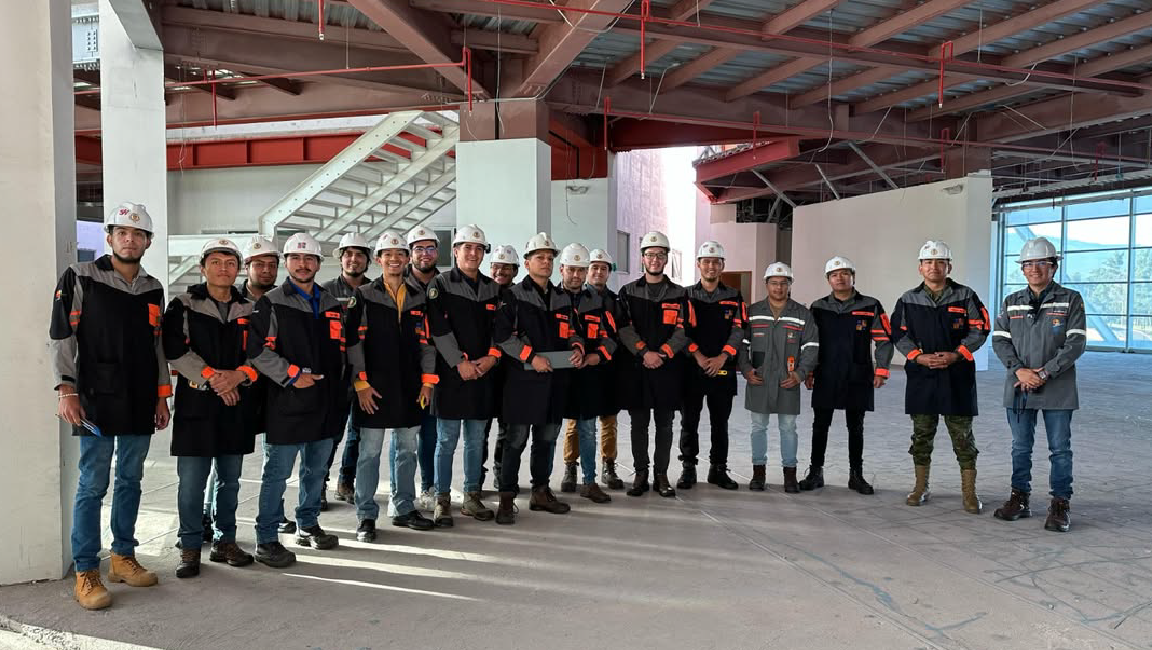
Gallery Gallery
Spaces, moments, and experiences that bring the program to life
Admissions and costs
Spaces, moments, and experiences that bring the program to life

CES Resolution
RPC-SO-15-No 309-2020
Program Code
ISOF-SQ-2023
Accreditation
In process
Application Dates
March – April 2025 / August – September 2025
Program cost:
Article 356 of the Constitution of the Republic establishes, among other principles, that third-level public higher education shall be tuition-free, and that this gratuity is linked to the academic responsibility of students.
Begin your path in
Mechanics
Join Universidad de las Fuerzas Armadas ESPE and become part of an
academic community of excellence with international reach.