












DEGREE
Higher Technology in Logistics and Transportation
DEGREE
Higher Technologist in Logistics and Transportation
CES Resolution
RPC-S0-15-No.302-2020
DURATION
2 years
MODALITY
On-campus
Academic Identity
Learn about the foundations of the program
- Mission
To train ethical professionals with solid knowledge in integrated logistics to efficiently organize, implement, improve, and control business logistics processes, with an emphasis on transportation, fleet management, and distribution, with a clear focus on enhancing quality, productivity, competitiveness, and sustainable development, contributing to the progress of the region and the country.
- Vision
A leader at the national and international levels in the training of technologists in Logistics and Transportation, aimed at promoting Ecuador’s productive sector in a comprehensive manner, with highly qualified technologists in knowledge management, and recognized as a benchmark in the practice of ethical, civic, and service-oriented values to society.
- Program Objectives
- General objective
To train technologist professionals in occupational safety and risk prevention, with technical, scientific, and ethical competencies, capable of identifying, evaluating, controlling, and managing occupational risks across different productive sectors, contributing to the protection of workers’ health, the prevention of accidents, and compliance with current occupational safety and health regulations.
1. Foundation.
Develop theoretical and conceptual knowledge in industrial safety, occupational health, and risk management, enabling an understanding of the nature of hazards and their impact on work environments.
2. Identification and Evaluation.
Apply technical methodologies for the identification, analysis, and assessment of occupational risks (physical, chemical, biological, ergonomic, and psychosocial) across diverse productive contexts.
3. Intervention and Control.
Design and implement measures for the prevention, control, and mitigation of risks through the use of technical standards, management systems, and industrial safety tools.
4. Management and Continuous Improvement.
Manage occupational safety and health systems, promoting a preventive culture, legal compliance, and continuous improvement within organizations.
Program video
Experience studying Higher Technology in Logistics and Transportation
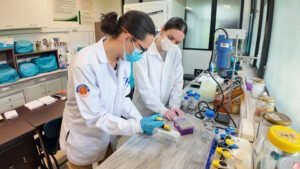
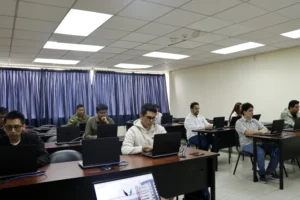
Discover daily life in our classrooms, laboratories, and academic spaces. Students, faculty, and researchers share their stories.
Learn about the foundations of the program
Profiles and outcomes
The professional we train and the competencies you will develop
- Professional Profile
The professional profile of the Higher Technology in Logistics and Transportation program is the set of specific competencies identified in the market study, which enables the professional to perform in the labor field through participation in community engagement projects and pre-professional internships in real environments within the technological area of logistics and transportation.
- Admission Profile
It is the set of specific attitudes and aptitudes that applicants to the Higher Technology in Logistics and Transportation program must possess, as outlined below.
– Numerical Reasoning: Ability, speed, and accuracy in calculation, enabling the manipulation of figures and the solution of quantifiable problems.
– Spatial Reasoning: Ability to visualize volumes and surfaces in two and three dimensions, and skill in interpreting graphs and maps.
– Logical Reasoning: Ability to understand relationships between facts, identify their causes, anticipate consequences, and solve problems in a coherent manner.
– Abstract Reasoning: Ability to extract input and output data from a problem situation and envision solutions. Capacity for observation and for perceiving details of objects, phenomena, or events, identifying particularities and recognizing differences.
– Perceptual Ability: Capacity to acquire knowledge of the surrounding world through sensory impressions, including the visual perception of shapes and details across different distances and spatial contexts.
– Attention and Concentration Capacity: Ability to voluntarily focus attention on an object or activity being performed, excluding external stimuli such as surrounding sounds and environmental noise.
– Rigorous Thinking. Think, reason, analyze, and argue in a logical, critical, and creative manner. Additionally: plan, solve problems, and make decisions.
– Communicate effectively. Understand and use language for communication and learning (both in the native language and in a foreign language). Express oneself orally and in writing in a correct, appropriate, and clear manner. Additionally, appreciate literature and other arts and recognize them as forms of expression.
– Reason numerically. Understand and apply mathematics in the formulation, analysis, and solution of theoretical and practical problems, as well as in the development of logical reasoning.
– Use technological tools in a reflective and pragmatic manner. Use Information and Communication Technologies (ICT) to explore and understand the surrounding reality, solve problems, access the information society, and express creativity, while avoiding the misappropriation and misuse of information.
– Understand the natural environment. Comprehend the natural environment through the explanation of physical, chemical, and biological phenomena supported by the scientific method, enabling the student to participate proactively and solve problems related to the natural domain, while respecting ecosystems and the environment.
- Learning Outcomes
Manages integrated logistics and foreign trade processes, adhering to international quality standards.
Proposes transportation systems to improve the mobility of people and facilitate the commercialization of products.
Designs transportation route systems through the application of methods and techniques, ensuring safety.
Executes logistics and transportation processes through the application of simulators for timely decision-making.
Curriculum Structure
Academic structure of the program
Current Curriculum
Non-Current Curriculum
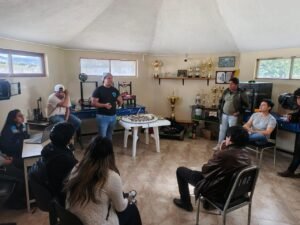
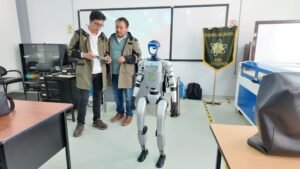
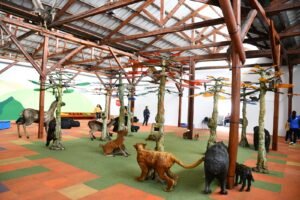
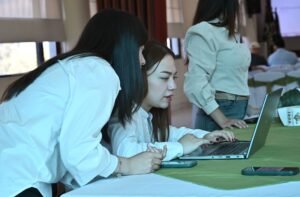
Gallery Gallery
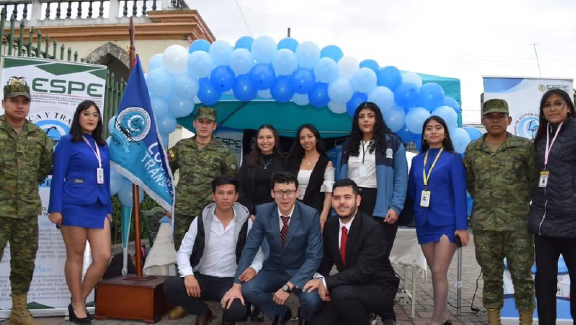
Spaces, moments, and experiences that bring the program to life

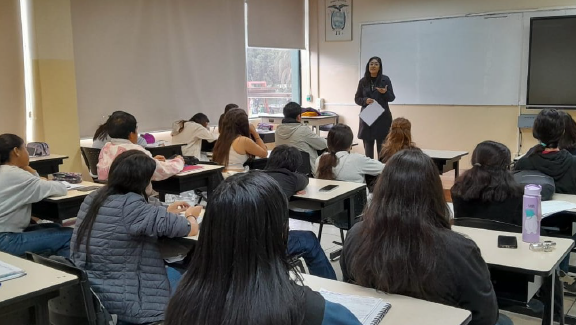
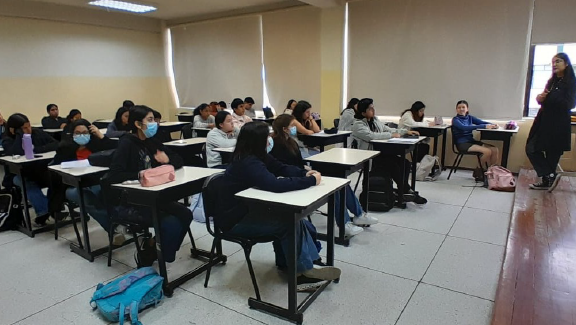
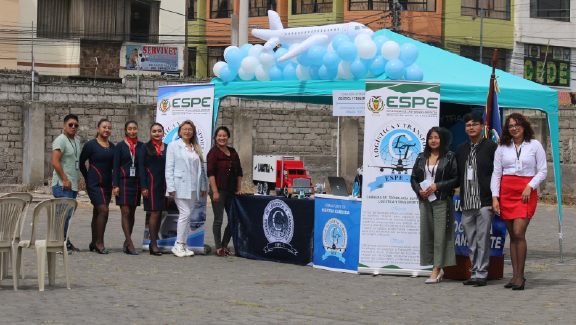
Admissions and costs
Spaces, moments, and experiences that bring the program to life
CES Resolution
RPC-SO-15-No 309-2020
Program Code
ISOF-SQ-2023
Accreditation
In process
Application Dates
March – April 2025 / August – September 2025
Program cost:
Article 356 of the Constitution of the Republic establishes, among other principles, that third-level public higher education shall be tuition-free, and that this gratuity is linked to the academic responsibility of students.
Begin your path in
Higher Technology in Logistics and Transportation
Join Universidad de las Fuerzas Armadas ESPE and become part of an
academic community of excellence with international reach.