

















DEGREE
Electromechanical Engineering
DEGREE
Electromechanical Engineer
CES Resolution
RPC-SE-09-No.086-202
DURATION
4.5 years
MODALITY
On-campus
Academic Identity
Learn about the foundations of the program
- Mission
The Electromechanics program trains engineers in the scientific and technological field within a framework of principles and values, and generates transferable knowledge to contribute to the progress of the country and the Armed Forces through teaching, research, and community engagement.
- Vision
By 2025, to be recognized as a program that contributes to national development, with active participation in projects, research, and community outreach for the solution of social problems.
- Program Objectives
- General objective
To train Electromechanical Engineers who are competent to design, plan, build, operate, and maintain energy-efficient electromechanical systems through the application of science and technology inherent to the fields that integrate electricity and mechanics, with the ability to implement technologies using inclusive, participatory, and gender-based approaches, grounded in the practice of values, in pursuit of the well-being of society and the environment.
1. Knowledge
Analyze, design, develop, and maintain electromechanical systems; enhance technological efficiency; optimize management and energy efficiency through the control of resources and processes; and formulate proposals for the use of alternative energy sources, through a flexible, systematic study model centered on student learning, incorporating instructional, practical, and autonomous components, as well as the execution of integrative projects that provide alternative solutions to societal problems and promote the comprehensive development of the country.
2. Relevance
Propose technical solutions to problems related to the design of electromechanical components, the development of technology in production processes, the operation of electrical and energy systems, the formulation of proposals for alternative energy sources, and the optimization of energy management; through the application of modern industrial techniques and technologies to optimize processes, the development of efficient energy transport systems, energy generation from alternative sources, the efficient use of non-renewable resources, and the enhancement of techniques and procedures of terotechnology. This is achieved through entrepreneurship and the development of research projects for the comprehensive utilization of electromechanical systems, with competence, solidarity, and commitment to the environment, in accordance with current national and international regulations.
3. Learning Outcomes
Develop competencies in future professionals to analyze, design, develop, and maintain systems in the areas of electricity, mechanics, energy conversion, maintenance, and energy efficiency, in order to train competent, proactive, creative, and innovative Electromechanical Engineers who are eager for knowledge, humanistic, with leadership capacity, critical thinking, and a strong sense of civic responsibility, committed to collective advancement through multidisciplinary teamwork, and capable of performing in both the private and public sectors.
4. Citizenship
Apply innovation, research, and community engagement in entrepreneurial projects that incorporate ancestral knowledge and respect for interculturality, with the capacity to implement technologies using inclusive, participatory, and gender-based approaches, grounded in the practice of values, in pursuit of the well-being of society.
Program video
Experience studying Electromechanical Engineering
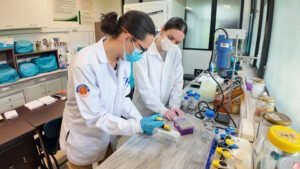
Discover daily life in our classrooms, laboratories, and academic spaces. Students, faculty, and researchers share their stories.
Learn about the foundations of the program
Profiles and outcomes
The professional we train and the competencies you will develop
- Professional Profile
Electromechanical Engineers are qualified and competent to design, plan, build, operate, and maintain energy-efficient electromechanical systems through the application of science and technology inherent to the fields that integrate electricity and mechanics, with the capacity to implement technologies using inclusive, participatory, and gender-based approaches, grounded in the practice of values, in pursuit of the well-being of society and the environment.
- Graduate Profile
- Interprets and applies standards, technical specifications, codes, manuals, plans, and diagrams of electromechanical equipment and systems, promoting quality and productivity in the industrial and service sectors.
- Recognizes and becomes aware of the importance of energy in today’s world and the effects that its consumption has on the environment, in order to develop projects that optimize energy generation and consumption without harming the environment..
- Act responsibly in the production of goods and services that involve electrical and mechanical systems, with the aim of improving living conditions and promoting the common good.
- It develops effective, sustainable, and viable plans and projects with a commitment to social responsibility and loyalty to society, while complying with current legal regulations.
- Leads, participates in, and collaborates with multidisciplinary and social groups, demonstrating values such as empathy, tolerance, punctuality, and responsibility.
- Recognizes physical, mathematical, and chemical principles and applies them to the solution of electromechanical problems.
- Interprets the relationships between the structure, properties, and processing of materials used in the components that underpin the technological processes employed at both the artisanal and industrial levels in the region.
- Designs electrical circuits using mathematical tools. Models static mechanical systems through electrical analogy.
- Provides the scientific foundations and technical procedures for the design and execution of machining processes.
- Selects, implements, and operates static and rotating electrical machines under steady-state conditions..
- Presents technical reports on distribution network projects. Analyzes and solves fluid mechanics problems at rest and in motion.
- Designs, implements, and operates electrical power generation plants.
- Develops the competencies necessary for an effective maintenance plan that will reduce response times, labor requirements, and both operational and non-operational costs, through the application of fifth-generation maintenance.
- Applies automation as a tool for the rational use of energy and energy savings, and applies the principles of energy management for the appropriate use of energy resources. Recognizes and becomes aware of the importance of energy and the effects that its generation, transmission, and consumption have on the environment.
- Communicates, through a report, scientific article, technological proposals, or comprehensive examination, the design, development, and evaluation of electromechanical equipment or processes aimed at solving identified problems in industrial electromechanical systems, in compliance with current regulations and national and international standards.
- Improves your ability to understand and convey messages clearly, coherently, and concisely in the context of your career.
- Write correctly in accordance with the latest guidelines issued by the RAE.
- Write prose that is free of errors and flaws, so that it has sufficient expressive power.
- Uses spoken language appropriately in academic settings.
- Describe the aesthetic characteristics of the fine arts.
- Reflects on the importance of cinema as a tool for persuasion and social regulation, as it underlies social, economic, political, and ideological contexts.
- Appreciates universal and Ecuadorian sculptural works through an understanding of the aesthetic and conceptual values that define them.
- Describes the aesthetic values of pictorial works through analysis of form and content with a reflective attitude.
- Demonstrates sensitivity in the appreciation of different artistic expressions in a critical and reflective manner, using literary language.
- Distinguishes the aesthetic characteristics of universal and Ecuadorian music.
- Characterizes environmental problems through cause-and-effect relationships.
- Identify the parameters that indicate the presence of contamination.
- Proposes strategies for sustainable waste management
- Analyze environmental management tools to ensure the sustainable use of natural resources
- Understand the global context, the challenges facing Latin America and the Caribbean, the region’s geography and natural resources, and the history of the Republic of Ecuador, using the necessary tools to analyze the national situation with a view to conducting a detailed study of geopolitics.
- Learn about Ecuador’s population, production, financial system, foreign trade, and democracy, using the tools necessary to assess the country’s current situation with a view to conducting a detailed study of its geopolitics.
- Understand the fundamentals, definitions, and nature of geopolitics; its drivers, scope, and applications; power and security; as well as the different stages of the Cold War, the influence of geopolitics on decision-making, and its repercussions on global society.
- Define the concept of a leader and broaden your perspective
- Develop a leader’s ability to communicate effectively.
- Explores the characteristics of a leader’s vision and mission and their implications.
- Identify the various research sources that will form the basis of the research process.
- Formulates scientific research questions while taking into account all relevant factors and the feasibility of carrying out the research.
- Develop the theoretical framework relevant to the selected topic and problem
- It employs various research designs, depending on the problem statement.
- Develop and test hypotheses.
- Develop the methodological framework for data collection.
- Use various software programs to carry out the planned activities.
- Draw conclusions based on the results of the research.
- Analyzes and evaluates alternative energy sources such as solar, wind, geothermal, and bioenergy, along with their technologies for use in electricity generation, as well as their environmental impact.
- Integrates acquired knowledge and technical expertise to develop projects with an electromechanical focus, using design engineering to solve regional problems.
Demonstrates the capacity for analysis and synthesis in order to develop the graduation project within the scope of the professional responsibilities of an Electromechanical Engineer.
- Learning Outcomes
Recognizes physical, mathematical, and chemical principles and applies them to the solution of electromechanical problems.
Interprets the relationships between the structure, properties, and processing of materials used in the components that underpin the technological processes employed at both the artisanal and industrial levels in the region.
Design electrical circuits using mathematical tools. Model static mechanical systems.
Provides the scientific principles and technical procedures for the design and implementation of machining processes
Selects, implements, and operates static and rotating electrical machines under steady-state conditions..
Presents technical reports on distribution network projects.
Analiza y resuelve problemas de mecánica de fluidos en reposo y en movimiento
Designs, implements, and operates electrical power generation plants.
Develops the competencies necessary for an effective maintenance plan that will reduce response times, labor requirements, and both operational and non-operational costs, through the application of fifth-generation maintenance.
Use automation as a tool for the efficient use of energy and energy conservation.
Apply energy management concepts to ensure the proper use of energy resources.
Recognize and become aware of the importance of energy and the environmental impacts of its production, transmission, and consumption.
Communicates, through a report, scientific article, technological proposal, or comprehensive examination, the design, development, and evaluation of electromechanical equipment or processes aimed at solving identified problems in industrial electromechanical systems, in compliance with current regulations and national and international standards.
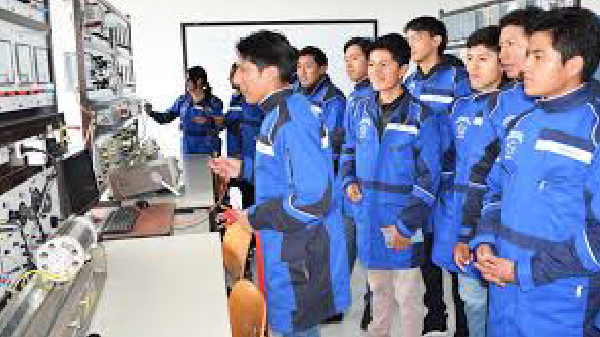
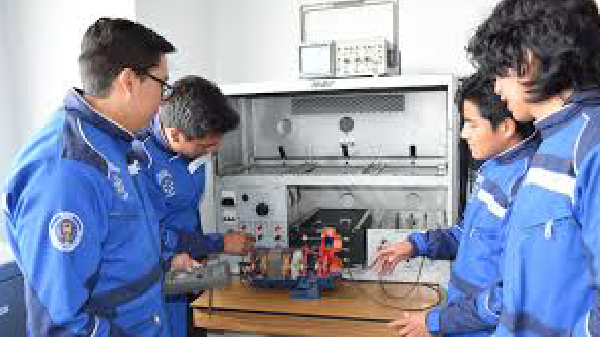
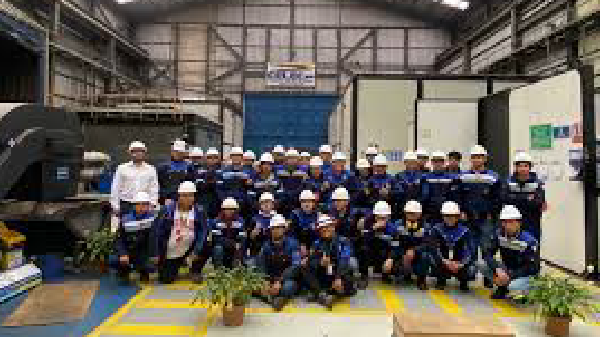
Gallery Gallery
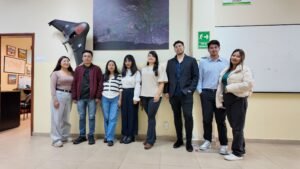
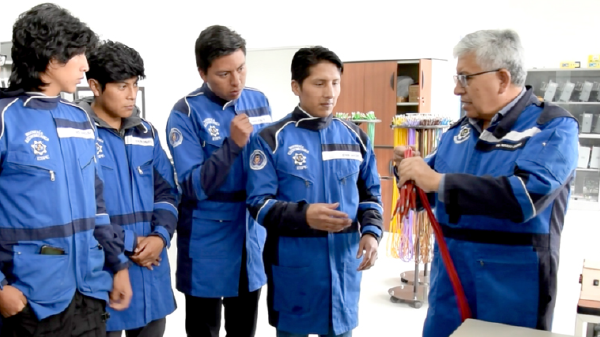
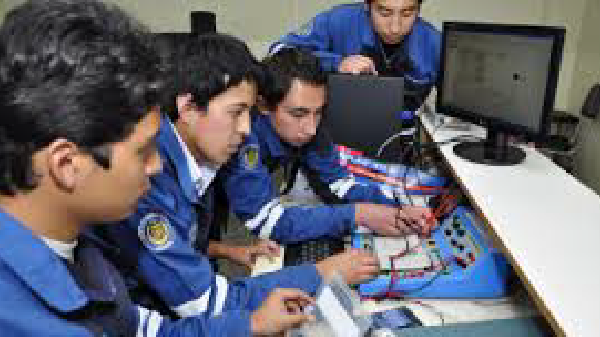
Spaces, moments, and experiences that bring the program to life
Admissions and costs
Spaces, moments, and experiences that bring the program to life

CES Resolution
RPC-SO-15-No 309-2020
Program Code
ISOF-SQ-2023
Accreditation
In process
Application Dates
March – April 2025 / August – September 2025
Program cost:
Article 356 of the Constitution of the Republic establishes, among other principles, that third-level public higher education shall be tuition-free, and that this gratuity is linked to the academic responsibility of students.
Begin your path in
Electromechanical Engineering
Join Universidad de las Fuerzas Armadas ESPE and become part of an
academic community of excellence with international reach.