













DEGREE
Civil Engineering
DEGREE
Civil Engineer
CES Resolution
RPC-SO-09_No. 086-2020
DURATION
4 Years
MODALITY
On-campus
Academic Identity
Learn about the foundations of the program
- Mission
To train Civil Engineers capable of designing, executing, and evaluating processes related to the production of goods and services in an integral manner, capable of promoting community development through participation in projects and works, protecting the environment and carrying out their activities with leadership, professional ethics, and fostering technological innovation.
- Vision
By 2025, to be recognized as a program that contributes to national development, with active participation in projects, research, and community outreach for the solution of social problems.
- Program Objectives
- General objective
To train Civil Engineers, capable of applying the basic sciences in the models, designs, construction, direction and supervision in the theoretical, technological, research, methodological and instrumental fields according to the advances, trends and innovations of the science and technology of the career, to solve problems in the areas of structures, hydrosanitary, roads, projects and new, traditional, small and medium-sized assets, intelligent and/or self-sustainable, which respond to the needs of society and culture in a critical, creative way, in harmony with the economic, financial and environmental aspects of current regulations.
1. To knowledge and learning
Conceive, calculate, design, implement, and operate civil works projects in the areas of structures, roads and field, hydro-sanitary systems, projects, and construction throughout the training process, through a flexible curriculum centered on student learning, and incorporating an early approach to the profession through field visits, laboratory and field activities, as well as outreach actions through project proposals and execution that allow for the practical application of knowledge in a real context, with an ethical attitude, harmonizing technical, economic, financial, and environmental aspects with current regulations.
2. To relevance
Respond to the need for basic infrastructure, housing, sanitation, drinking water systems, sewerage, and roads, and contribute technical solutions to the destructive action of natural disasters, such as earthquakes, river flooding, landslides, and collapses, allowing for the improvement of citizens' living conditions through safe, comfortable, sustainable, and self-sufficient projects.
3. To learning processes
Develop competencies in students so that when conceiving, calculating, designing, implementing, and operating civil works projects in the areas of structures, roads and field, hydro-sanitary systems, projects, and construction, they are flexible, capable of contributing to innovation and creativity, and able to face uncertainties; they are interested in lifelong learning and prepared for it, with social sensitivity and communication skills; to work in teams, and to assume responsibilities for research and the application of new technologies.
4. To integral citizenship
Integrate management, innovation, research, and outreach in the projects undertaken, respecting interculturality, gender focus, participation, and ancestral knowledge, in pursuit of improving the population's quality of life.
Program video
Experience studying Civil Engineering
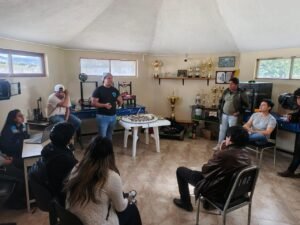
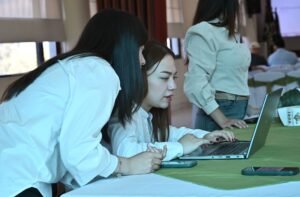
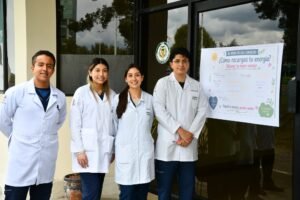
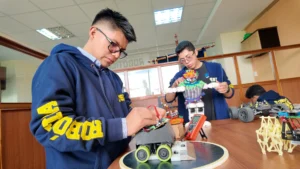
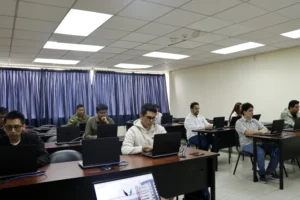
Discover daily life in our classrooms, laboratories, and academic spaces. Students, faculty, and researchers share their stories.
Learn about the foundations of the program
Profiles and outcomes
The professional we train and the competencies you will develop
- Professional Profile
The activities of a civil engineer are closely linked to the development of society and its economic growth. They are focused on civil works in the fields of:
- Planning
- Execution
- Control
- Administration
- Operation
- Maintenance
- Graduate Profile
The graduate of the Civil Engineering program will be capable of solving problems, calculating, designing, constructing, auditing, planning, managing, advising, and researching in the areas of Structures; Roads and Field; Hydro-sanitary Systems; Projects and Construction, through the application of fundamental basic sciences, technical construction standards, and the use of cutting-edge technology; always acting with technical criteria, ethics, honesty, discipline, responsibility, and strict application of quality criteria.
- Learning Outcomes
Identifies the physical-geographical reality and the intrinsic characteristics of construction materials, respecting the surroundings and the environment of the areas of influence; characterizes materials from physical, chemical, and mechanical perspectives, applying practices based on scientific rigor, technical standards, and logical reasoning, using technical-practical language.
Prepares plans with graphical representation of Civil Engineering components and elements, in strict compliance with current regulations, using technical language and applying physical and mathematical theories, laws, principles, and concepts; performs analysis in the process of soil and deposit formation; recognizes the influence of increased moisture on soil behavior and calculates geostatic and surface-transmitted stresses to the soil; uses iterative modeling methods for the analysis and design of hydraulic works, respecting the economy, culture, environment, beliefs, and user requirements.
Calculates and designs essential structures in strict compliance with current regulations to guarantee safety and economy; through the planning, administration, and control of works and projects, integrating knowledge from the different areas of Civil Engineering.
Formulates, designs, and develops Civil Engineering projects, distributing activities, allocating resources, and utilizing technological innovations with the application of technical, legal, financial, and environmental regulations.
Develops earthquake-resistant projects using horizontal diaphragms, shear walls, energy dissipators, and seismic isolators; likewise, examines structures built with biomaterials using finite models and proposes the application of innovative biological, mechanical, and structural fundamentals.
Interprets and solves real-world problems by applying research methods, scientific methods, technological tools, and various information sources in national and foreign languages, with honesty, responsibility, teamwork, and respect for intellectual property.
Demonstrates leadership qualities and an entrepreneurial spirit for the management of business and social projects in the public and private sectors; and promotes a culture of environmental conservation in professional and social practice.
Applies knowledge of basic sciences and Civil Engineering sciences; analyzes, plans, designs, constructs, supervises, and evaluates Civil Engineering works; prevents and evaluates risks in civil works, as well as identifies, assesses, and implements the most appropriate technologies.
Gallery Gallery
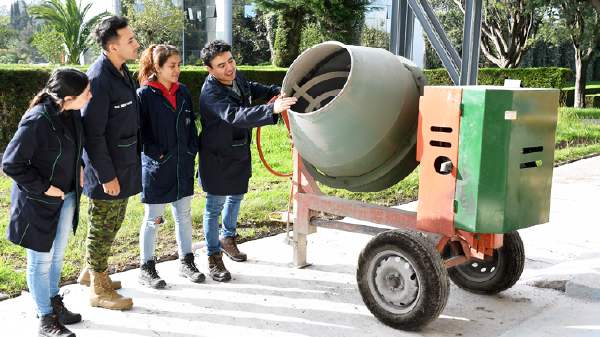
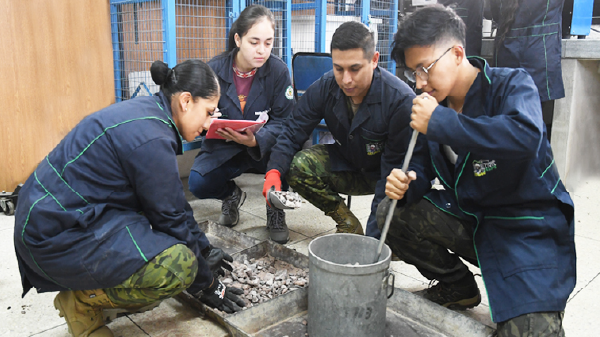
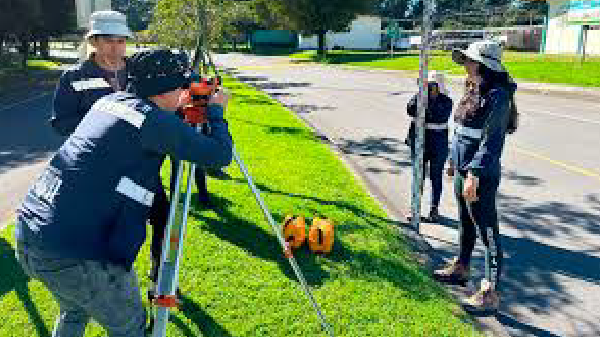
Spaces, moments, and experiences that bring the program to life
Admissions and costs
Spaces, moments, and experiences that bring the program to life

CES Resolution
RPC-SO-15-No 309-2020
Program Code
ISOF-SQ-2023
Accreditation
In process
Application Dates
March – April 2025 / August – September 2025
Program cost:
Article 356 of the Constitution of the Republic establishes, among other principles, that third-level public higher education shall be tuition-free, and that this gratuity is linked to the academic responsibility of students.
Begin your path in
Civil Engineering
Join Universidad de las Fuerzas Armadas ESPE and become part of an
academic community of excellence with international reach.