
















DUAL TRAINING
Aeronautical Sciences
Select a campus
You are viewing information for the campus: ESMA Special Academic Unit
DEGREE
Bachelor of Military Aeronautical Sciences
CES Resolution
RPC-SO-15-No.309-2020
DURATION
4 Years
MODALITY
Dual
Academic Identity
Learn about the foundations of the program
- Mission
To train military professionals for the Ecuadorian Air Force, highly qualified in the itineraries of Military Pilot and Military Aeronautical Technician, with a solid academic preparation in aeronautical sciences, military ethics and leadership, committed to the military institution; with professional, operational and technical skills, through rigorous and disciplined instruction, with the aim of guaranteeing the security and defense of the airspace and the sovereignty of Ecuador.
- Vision
To be, by 2030, a benchmark academic career in the region, recognized for excellence in the training of aeronautical military leaders. Graduating officers will be noted for their professionalism, operational capability, ethical responsibility, and commitment to national security and defense, and peace. The program seeks to be at the forefront of technology and doctrine, integrating innovations in the field of aeronautics to face contemporary challenges and threats to national security and defense.
- Program Objectives
-
General and Specific Objectives
Develops habits of adaptation to the internal regime and language of military communication, leading teams with strict adherence to legal norms, military discipline and maintaining respect for the members of the group. In addition, it develops subordination and awareness of military discipline, respecting fundamental, institutional and personal values. Future professionals make critical judgments regarding values and attitudes in the face of social, personal and relational problems and conflicts, and show respect for the environment, nature, Human Rights, International Humanitarian Law, gender equality and interculturality.
To train professionals with technical and ethical competencies in software development.
Promote research and innovation in information technologies.
Strengthen links with the productive sector and the community.
To guarantee the continuous improvement of academic processes.
Program video
Experience what it’s like to study Merchant Marine Officer
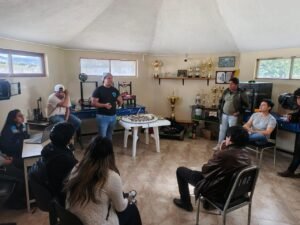
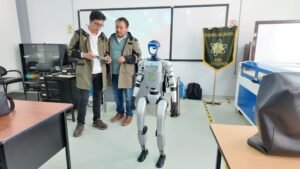
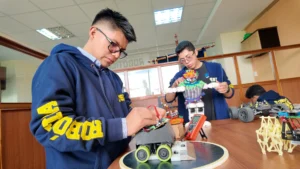
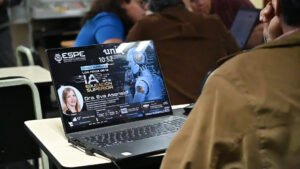
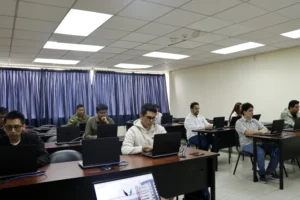
Discover daily life in our classrooms, laboratories, and academic spaces. Students, faculty, and researchers share their stories.
Learn about the foundations of the program
Profiles and outcomes
The professional we train and the competencies you will develop
- Professional Profile
Their training allows them to work with professionals (engineers and technicians) in aeronautics and space, as well as with professionals from other disciplines eventually involved in their activity (avionics, civil constructions, mechanics, electricity, electronics, IT, etc.). It may also act by providing aeronautical services autonomously.
The Bachelor’s Degree in Military Aeronautical Sciences is trained to work in the areas of: technical office, training management, maintenance, workshop, laboratories, planning and engineering, operations, certifications, inspections, arbitrations, and technical representation, and quality, acting in a relationship of dependence or independently in different phases of the production processes of the aeronautical industry, in service companies, and in aeronautical infrastructure.
- Graduate Profile
Develops habits of adaptation to the internal regime and language of military communication, leading teams with strict adherence to legal norms, military discipline and maintaining respect for the members of the group. In addition, it develops subordination and awareness of military discipline, respecting fundamental, institutional and personal values. Future professionals make critical judgments regarding values and attitudes in the face of social, personal and relational problems and conflicts, and show respect for the environment, nature, Human Rights, International Humanitarian Law, gender equality and interculturality.
Performs activities in any military unit of the Air Force at the tactical level according to its classification. It manages essential information to determine combat support capabilities, and applies probabilistic calculation to reduce levels of insecurity in air operations. The military professional also integrates and analyzes information for planning and appropriate decision-making in tactical employment, as well as applies the fundamentals of the use of air power in military operations of external, internal, multinational defense and integral security of the State in accordance with the aerospace doctrine. It has the capacity to execute military planning and use the security and ground defense systems of Air Bases and participate in the development of military external-internal defense operations.
It recognizes the physical and chemical principles to explore the limits of the national aerospace dimension, develops critical and abstract thinking through mathematical and philosophical analysis of the context in which the military profession develops, and transparently manages the resources assigned to tactical units. Conduct research to meet cognitive needs and manage information securely. Processes information to obtain logical conclusions and propose viable solutions, solving problems with a critical sense and proposing ethical alternatives, which allow them to exercise command and leadership, as well as the management of resources. The two pathways develop the ability to transfer knowledge through instruction.
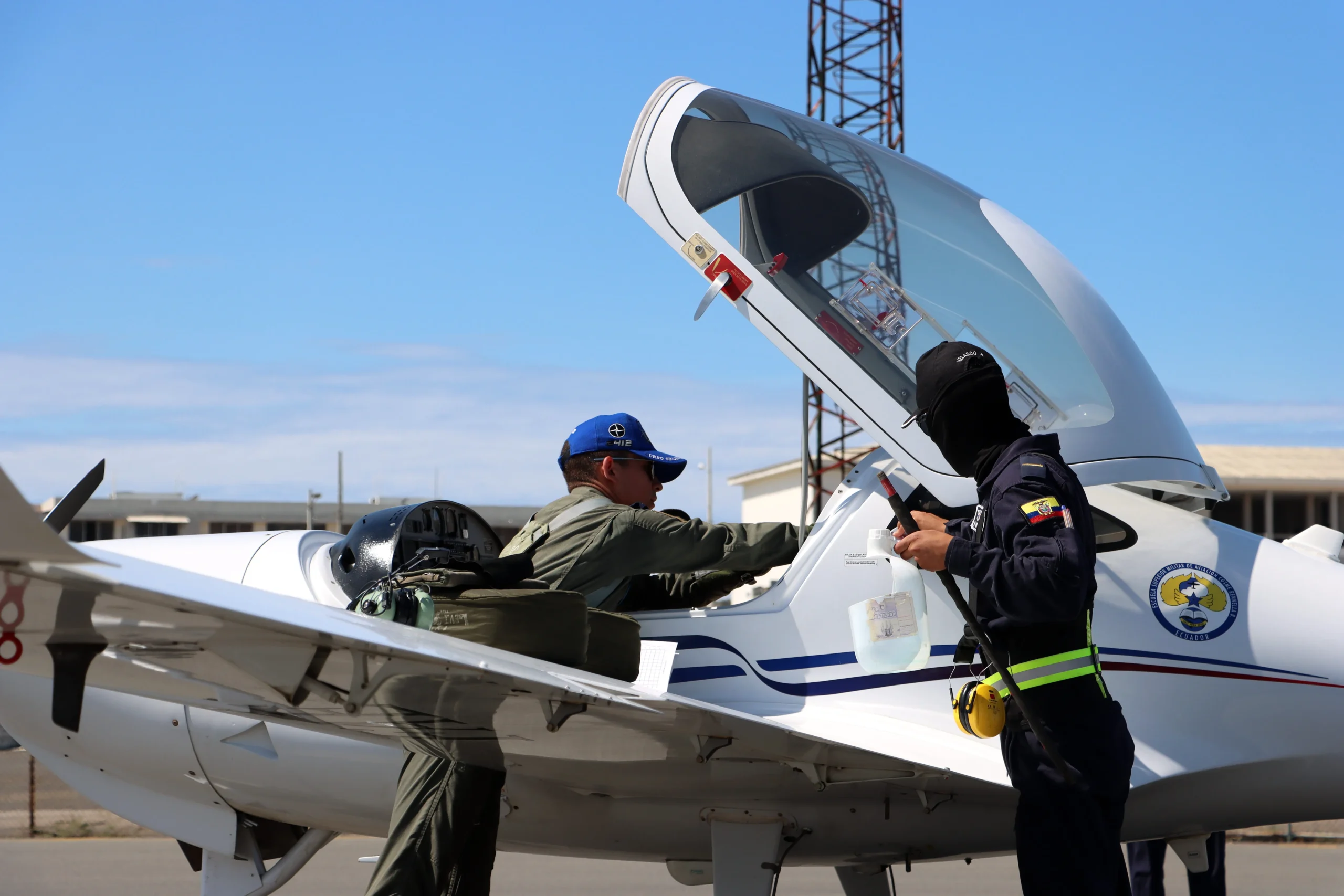
On Itinerary I, pilot a fixed-wing aircraft in strict compliance with the flight manual. Performs performance calculations for maneuvers during flight operations.
In Itinerary II, according to its specialty (personnel, supplies, air armament, air infantry, intelligence, air defense, electronics, maintenance, computing, communications) it will be able to calculate the provisions of armament, fuel, personnel management, aeronautical communications according to international standards, in addition, it provides security to the aeronautical infrastructure.
- Learning Outcomes
Management of military models, protocols, processes and procedures. Performs activities in any military unit of the Air Force at the tactical level according to its classification. It manages essential information to determine combat support capabilities, and applies probabilistic calculation to reduce levels of insecurity in air operations. The military professional also integrates and analyzes information for planning and appropriate decision-making in tactical employment, as well as applies the fundamentals of the use of air power in military operations of external, internal, multinational defense and integral security of the State in accordance with the aerospace doctrine. It has the capacity to execute military planning and use the security and ground defense systems of Air Bases and participate in the development of military external-internal defense operations.
Cognitive abilities and generic competencies. It recognizes the physical and chemical principles to explore the limits of the national aerospace dimension, develops critical and abstract thinking through mathematical and philosophical analysis of the context in which the military profession develops, and transparently manages the resources assigned to tactical units. Conduct research to meet cognitive needs and manage information securely. Processes information to obtain logical conclusions and propose viable solutions, solving problems with a critical sense and proposing ethical alternatives, which allow them to exercise command and leadership, as well as the management of resources. The two pathways develop the ability to transfer knowledge through instruction.
Specific mastery of theories, conceptual systems and methods in professional performance. On Itinerary I, pilot a fixed-wing aircraft in strict compliance with the flight manual. Performs performance calculations for maneuvers during flight operations.
In Itinerary II, according to its specialty (personnel, supplies, air armament, air infantry, intelligence, air defense, electronics, maintenance, computing, communications) it will be able to calculate the provisions of armament, fuel, personnel management, aeronautical communications according to international standards, in addition, it provides security to the aeronautical infrastructure.
Curriculum Structure
Academic structure of the program
Current Curriculum
Curriculum 2019 (No Longer in Force)
Program Teachers
Meet those who will guide you
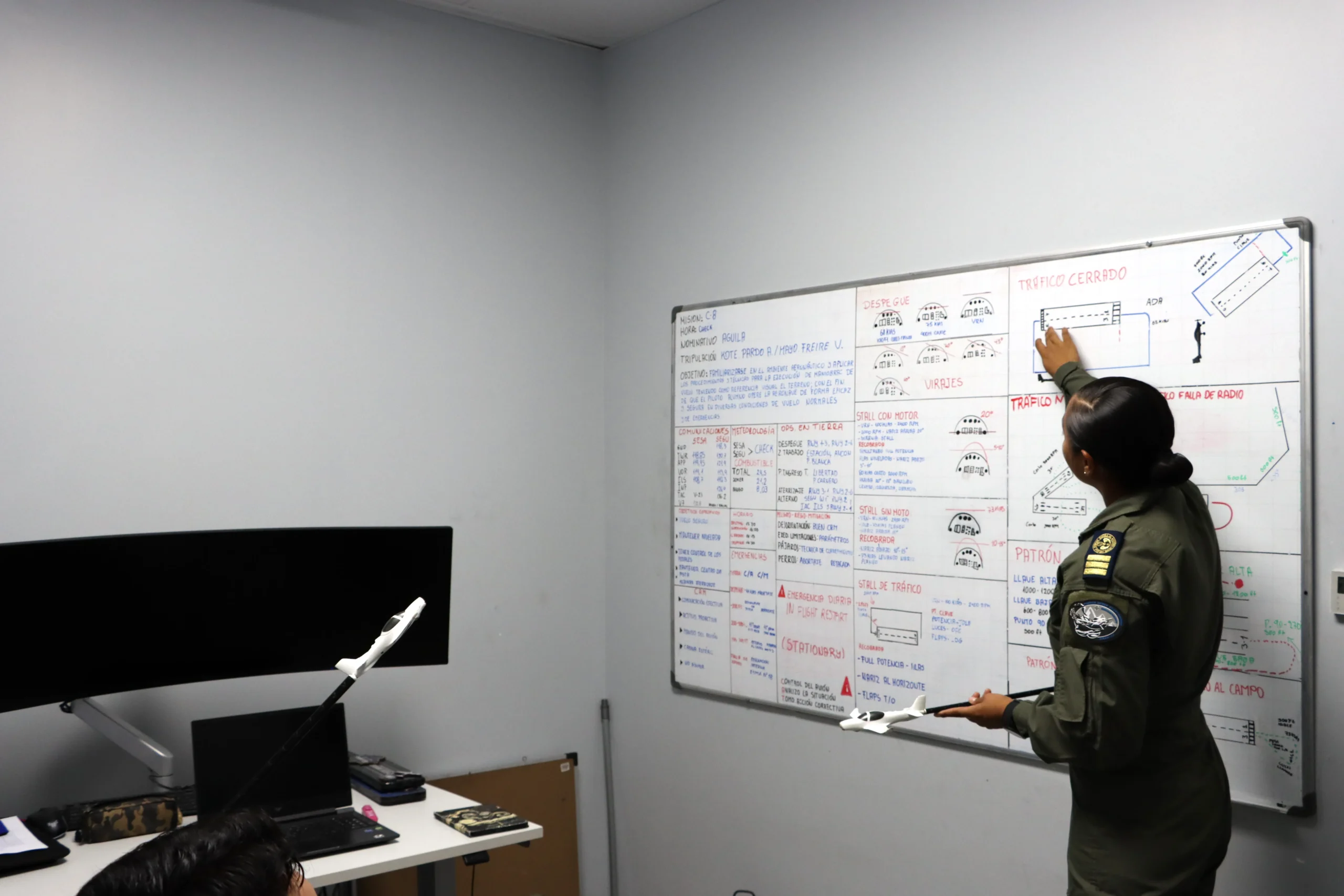
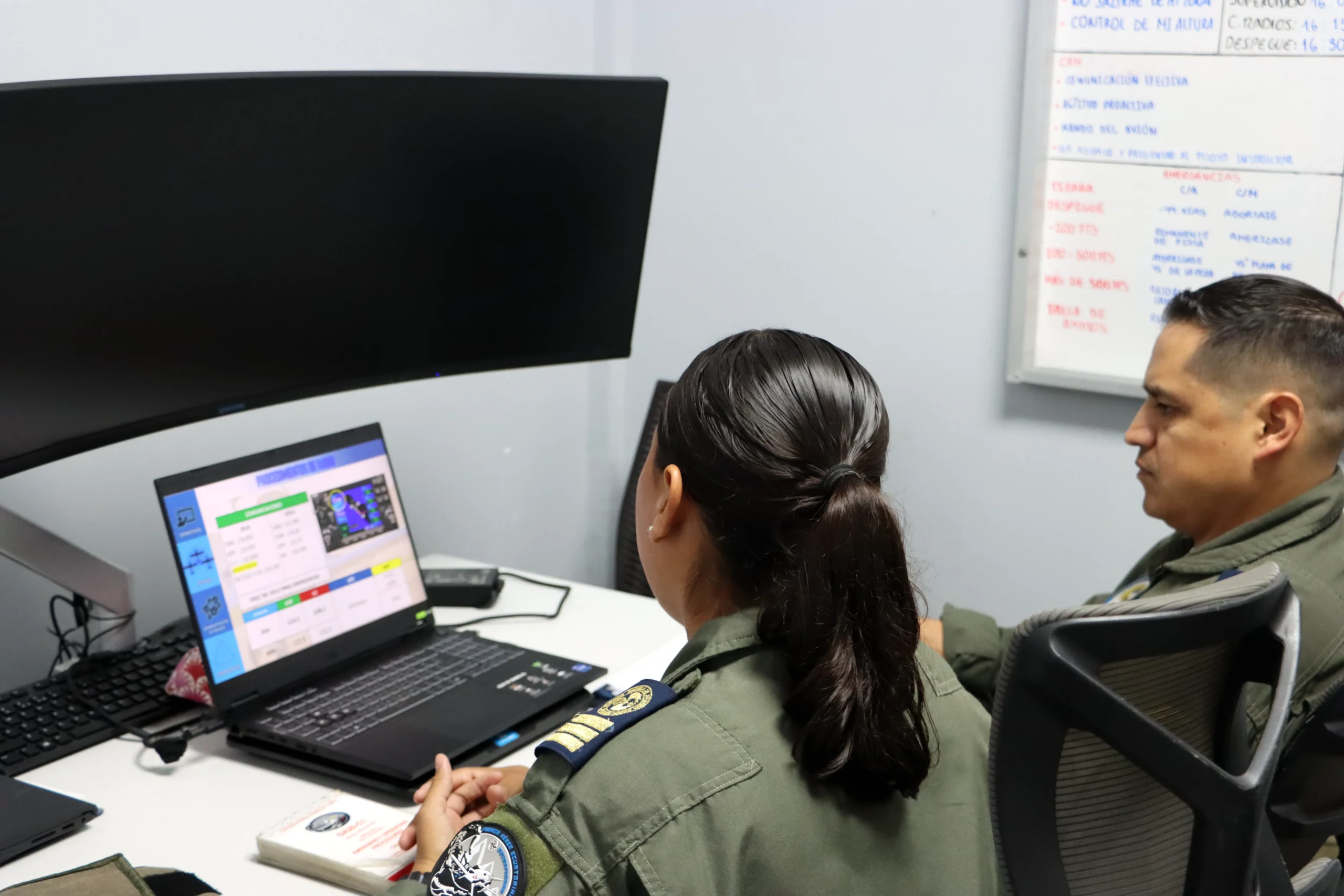
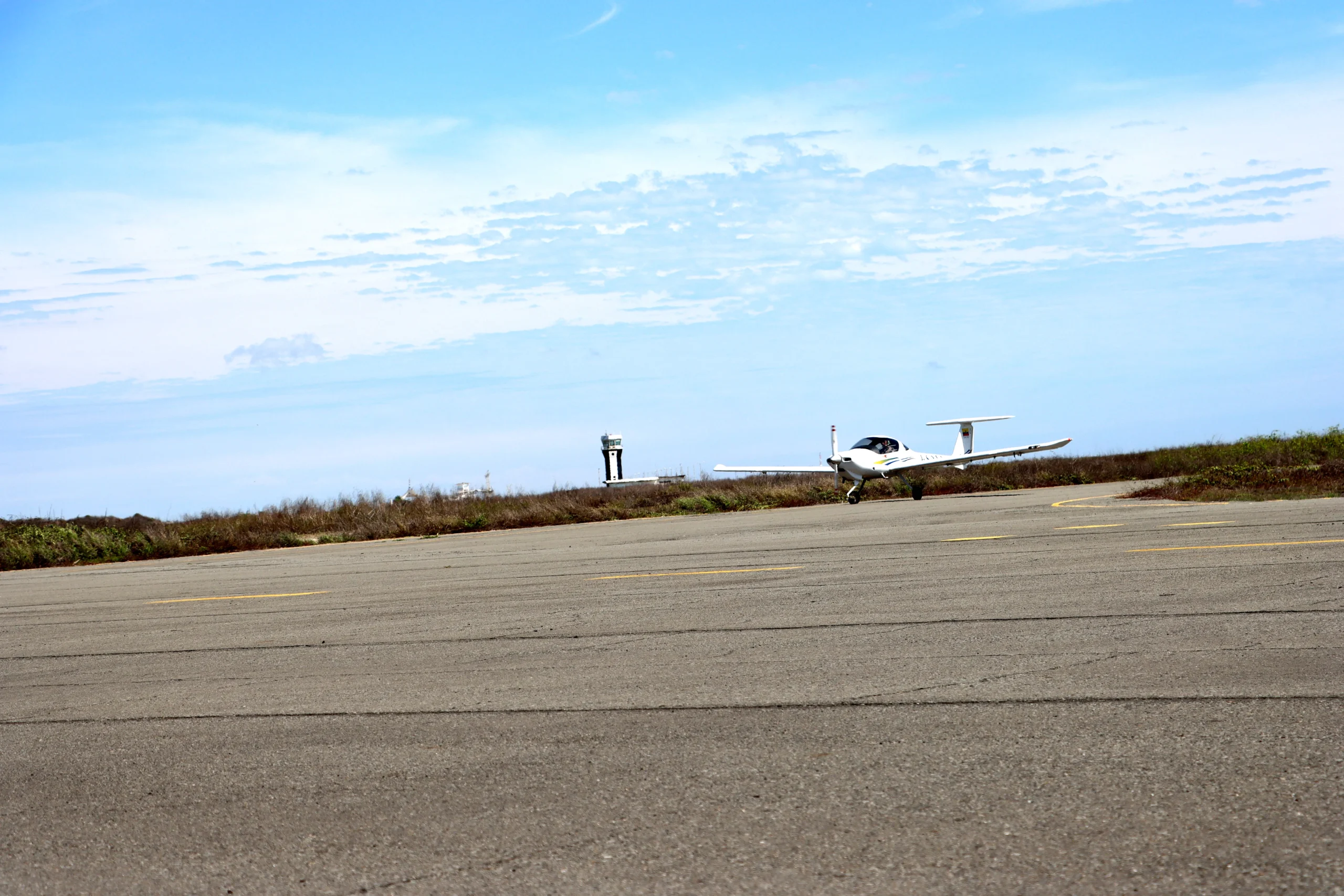
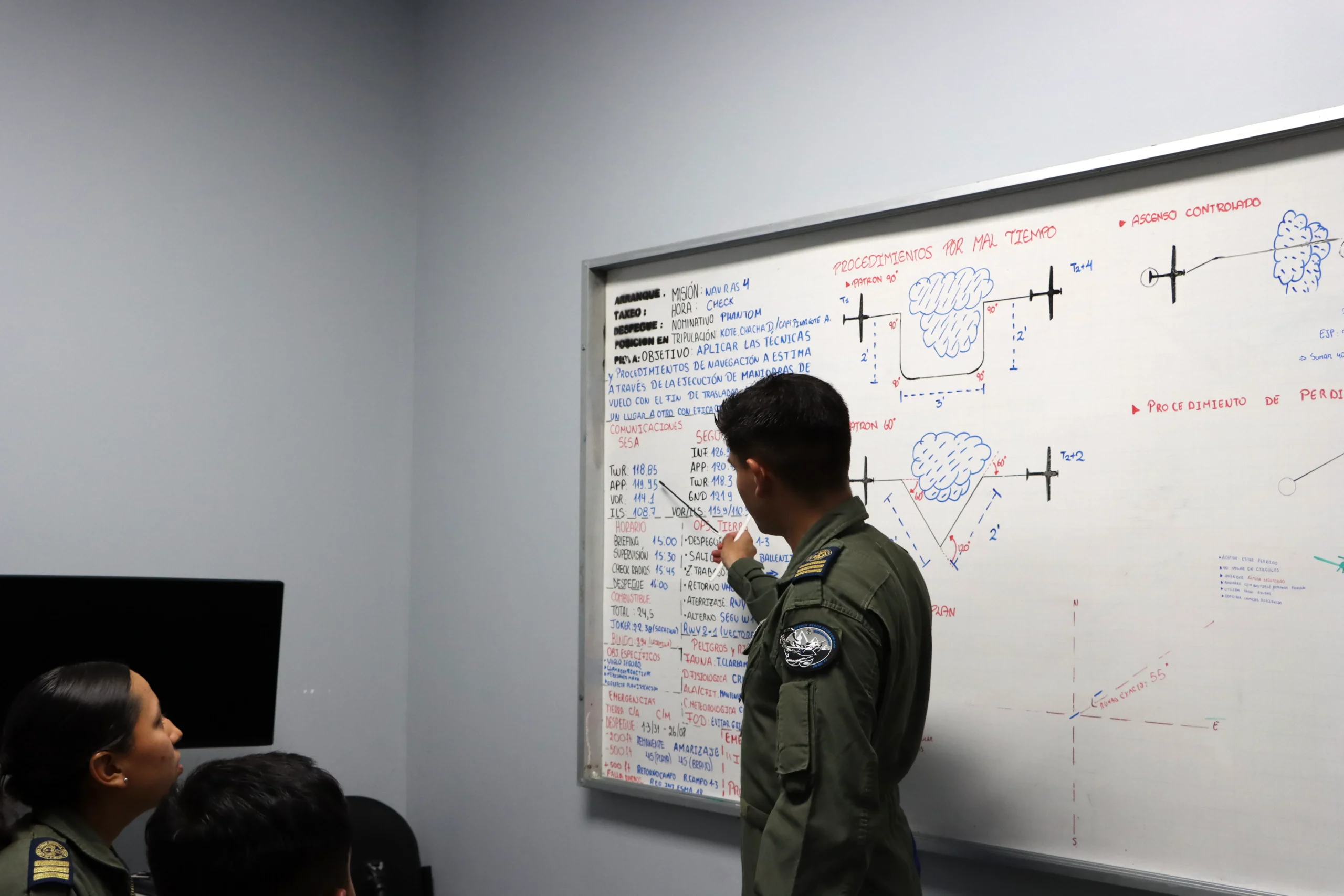
Gallery Gallery
Spaces, moments, and experiences that bring the program to life
Admissions and costs
Spaces, moments, and experiences that bring the program to life

CES Resolution
RPC-SO-15-No 309-2020
Program Code
ISOF-SQ-2023
Accreditation
In process
Application Dates
March – April 2025 / August – September 2025
Program cost:
Article 356 of the Constitution of the Republic establishes, among other principles, that third-level public higher education shall be tuition-free, and that this gratuity is linked to the academic responsibility of students.
Begin your path in
Aeronautical Sciences
Join Universidad de las Fuerzas Armadas ESPE and become part of an
academic community of excellence with international reach.