




















DEGREE
Higher University Technology in Safety and Prevention of Occupational Risks
DEGREE
Higher University Technologist in Occupational Safety and Risk Prevention
CES Resolution
RPC-SO-43-No.655-2025
DURATION
3 years
MODALITY
On-campus
Academic Identity
Learn about the foundations of the program
- Mission
To train University Technologists of excellence, creative, humanistic with leadership capacity to solve problems in workplace safety, psychosocial risks, industrial hygiene and applied ergonomics, with technical professional judgment and social responsibility, to promote safe and healthy work environments.
- Vision
By 2030, to be a benchmark in the training of higher university technologists in occupational safety and risk prevention, recognized nationally for their high technical level with ethical, civic, and community service values.
- Program Objectives
- General objective
To train professionals qualified to identify, analyze, evaluate, and manage occupational risks in various productive sectors, ensuring safety and health, with technical and practical competencies that enable the implementation of preventive and corrective measures, based on Ecuadorian legal regulations and standards, to reduce workplace accidents, occupational diseases, and improve working conditions in the country. Additionally, it focuses on promoting a culture of safety and well-being in the work environment.
To develop in students technical competencies for the identification, measurement, and evaluation of occupational risks through the application of methodologies, instruments, and current standards, enabling the diagnosis of unsafe conditions and risk factors in different work environments.
To strengthen the capacity to design, implement, and supervise occupational risk prevention programs, integrating technical, administrative, and personal protection control measures, in accordance with Ecuadorian legal regulations and international occupational safety and health standards.
To foster the training of professionals with critical thinking and a preventive approach, capable of promoting an organizational safety culture through training, awareness, and continuous improvement processes that contribute to workplace well-being and the reduction of accidents and occupational diseases.
Program video
Experience studying Higher University Technology in Occupational Safety and Risk Prevention
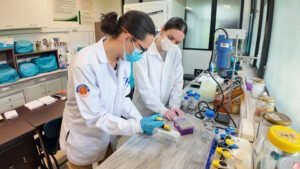
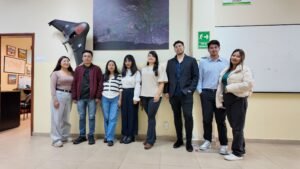
Discover daily life in our classrooms, laboratories, and academic spaces. Students, faculty, and researchers share their stories.
Learn about the foundations of the program
Profiles and outcomes
The professional we train and the competencies you will develop
- Professional Profile
- To develop competencies and attitudes that enable the future technologist to improve quality of life, the work environment, safety, and sustainability, emphasizing respect for life, physical integrity, and the safety of individuals, and valuing the work environment as a space to protect.
- To promote a sociocultural transformation oriented toward creating safer, healthier, and more supportive work environments, based on ethical, innovative practice committed to research, respect for cultural diversity, and ancestral knowledge.
- To participate in responsible actions that protect people and the environment, acting autonomously, collaboratively, and supportively in implementing strategies to reduce occupational risks and improve safety.
- To act with responsibility, empathy, and respect, integrating ethical and bioethical principles in safety management, defending the rights of workers and vulnerable groups in the workplace.
- To actively participate in projects and programs aimed at improving workplace safety, aligning with sustainable development and accident prevention strategies, combining ethical, legal, intercultural, gender, and equity knowledge to manage innovative projects that improve safety and quality of life in the work environment.
- To integrate values of continuous improvement through constant learning and the application of the scientific method in their professional field.
- Graduate Profile
The graduate profile of the Occupational Safety and Risk Prevention program comprises the set of integrated knowledge organized coherently and consistently oriented toward understanding the various problems and thematic areas of the profession’s object. To this end, the knowledge and skills that students must deepen are selected in a theoretical-practical relationship, with the purpose of developing competencies that will be applied in the workplace. These are detailed below:
- To implement agile management methodologies (5S) integrated with digital tools for classification, order, cleanliness, standardization, and discipline, contributing to the reduction of accidents and occupational diseases, and improving operational efficiency.
- To apply industrial safety standards, protocols, and procedures, in accordance with current legislation, ensuring safe conditions in operations and production processes.
- To apply standardized methodologies and appropriate technologies in the identification, measurement, analysis, evaluation, and control of occupational risks, promoting continuous improvement in occupational safety and health management systems.
- To monitor the requirements of regulatory entities related to workplace safety, ensuring regulatory compliance and strengthening the preventive culture in organizations.
- To record and interpret standardized risk matrices, identifying hazards in different work environments and proposing appropriate corrective and preventive measures.
- To apply emerging technologies and specialized software for risk management, preparation of technical reports, and data analysis in workplace safety.
- Learning Outcomes
Apply methods and methodologies for risk identification
Design and apply safety management models
Develop and implement safety protocols
Optimize risk prevention processes
Implement emergency response procedures
Develop research capabilities for workplace safety
Develop continuous improvement procedures in OSH
Train and educate personnel in safety procedures
Monitor and evaluate processes through safety audits
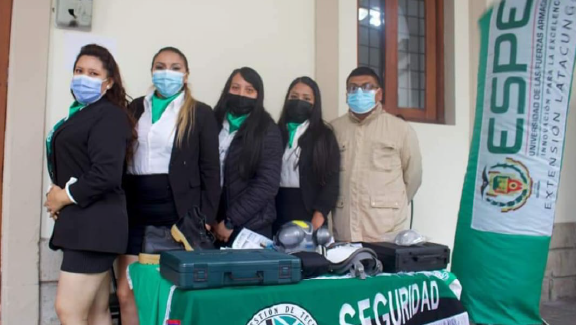
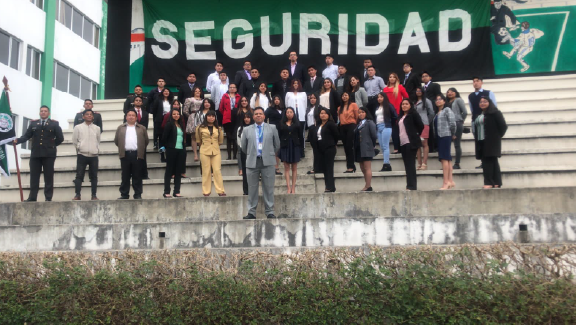
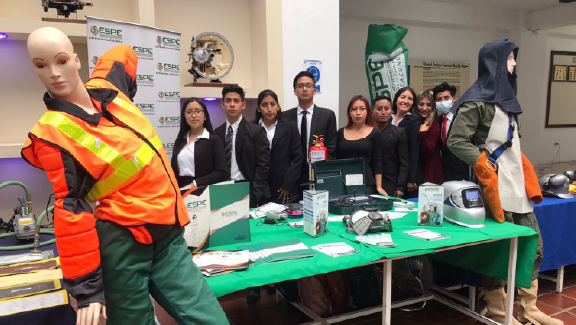
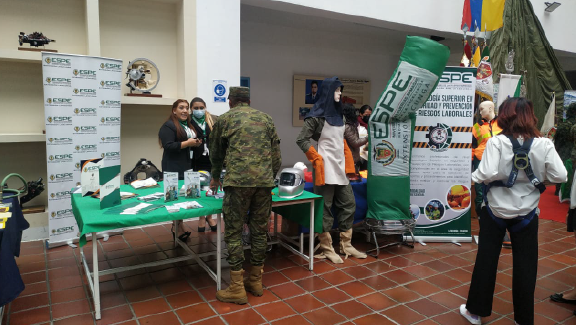
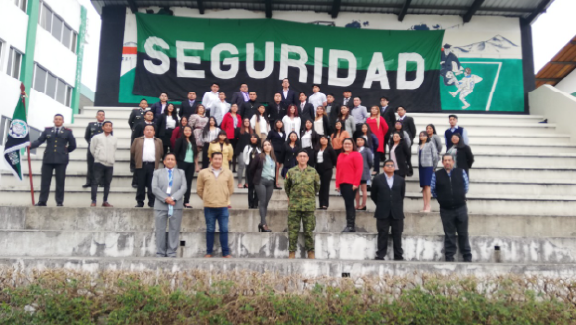
Gallery Gallery
Spaces, moments, and experiences that bring the program to life
Admissions and costs
Spaces, moments, and experiences that bring the program to life
CES Resolution
RPC-SO-15-No 309-2020
Program Code
ISOF-SQ-2023
Accreditation
In process
Application Dates
March – April 2025 / August – September 2025
Program cost:
Article 356 of the Constitution of the Republic establishes, among other principles, that third-level public higher education shall be tuition-free, and that this gratuity is linked to the academic responsibility of students.
Begin your path in
Higher University Technology in
Occupational Safety and Risk Prevention
Join Universidad de las Fuerzas Armadas ESPE and become part of an
academic community of excellence with international reach.